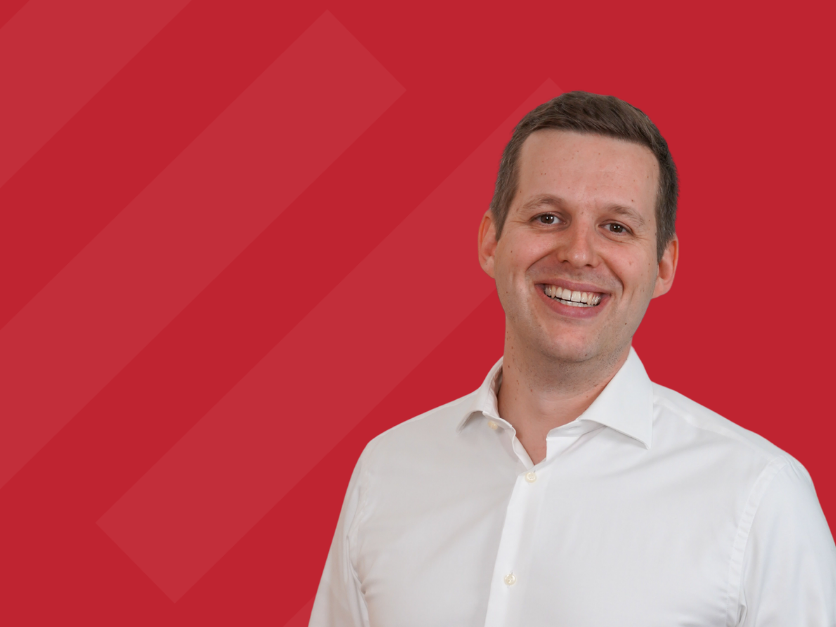
100% Inbound, Zero Rainmakers: How much. Consulting Grew to €12M With E-Commerce Marketing Tactics
Simon Stappen grew much. Consulting from €0 to a projected €12-13M in 8 years by running it like an e-commerce funnel, not a typical consulting pipeline, and this deep dive shows how he did it, including what happened when 70% of his revenue disappeared overnight.
In late 2017, Simon Stappen, Managing Partner and Founder of much. Consulting, a 110-person, 3-country consultancy that helps mid-sized companies select and implement ERP systems, had none of what usually grows a consulting company.
No client list, no industry contacts, no family network to call on.
He had come from data-driven marketing roles before founding much. Consulting, so instead of selling the way an established consultancy sells, he built a client pipeline the way an e-commerce brand builds one.
He found the people already close to buying, then built a system to reach them.
That system now runs the DACH business at 100% inbound, zero outbound calls, and it has taken much. Consulting from €0 to a projected €12-13M in eight years without a partner network.
TL;DR
- Grew from €0 to a projected €12-13M in 8 years with no partner network: 80-85% of new clients had never had a relationship with the company before signing.
- Every channel is tracked from a single ad click through to an invoiced euro, not just to a lead.
- When the e-commerce client base that had driven roughly 70% of its revenue dried up in 2023, it deliberately rebuilt around a different industry and buyer instead of waiting it out.
- A 12-person sales team owns no equity.
- Organic search, the channel it leaned on hardest, is now the one cracking first under AI search.
8 in 10 New Clients Had Never Met Him
Simon and his co-founders started much. Consulting in late 2017, while they were still studying for their master's degrees in Munich. They'd been freelancing between their bachelor's and master's programs, picked up a deal too large to run on personal liability, and incorporated to protect themselves. Simon didn't graduate and go full-time until early 2020, over two years after the company was founded.
None of them had existing industry contacts or a client list to draw on. As Simon puts it: "I'm not so sure this was about belief. It was more about necessity."
A 22-year-old with no established contacts can't sell the way an established company sells, off relationships built over years. So he didn't try to. Early on, that meant showing up at every business event that would let them through the door, mostly for the novelty of it, few 22-year-olds turn up at serious industry events, but it was slow and it didn't scale.
What did scale was treating client acquisition like an e-commerce funnel instead of a professional-services one, finding the people already close to buying, building a system to reach them, and no longer depending on anyone already knowing who they were.
The numbers back up how far they took this. At one point, Simon estimates, roughly 95% of their clients had no prior relationship with the company. Even today, with a large client base behind them, he puts the figure at 80-85%, four out of five new clients who'd never met anyone at much. Consulting before they signed.
If your own company has grown off partner networks, referrals, and teams that switch companies bringing relationships with them, much. Consulting did the opposite. It had to build something else instead.
The Inbound Strategy: AdWords, Then SEO, Then Events.
much. Consulting's marketing started with the same question an e-commerce brand asks: which clicks are closest to buying?
Simon had come from data-driven marketing roles before founding the company, and he applied that thinking directly to professional services. They started at the bottom of the funnel, targeting people already trying to buy an ERP system, and built out from there.
| Channel | Started | Why it worked then |
|---|---|---|
| Google AdWords | 2019 | Professional-services advertising in Germany was cheap and largely uncontested, letting them test messaging fast for very little money |
| SEO and content | 2021-2022 | IT decision-makers, a key buying influence, run ad blockers at a high rate. Ranking organically was the only way to reach them at all |
| Events (sponsorship and attendance) | 2024-2025 | In-person contact built the kind of trust that lifted conversion on everything else, even though it produced few direct leads on its own |
| Personal LinkedIn branding | Mid-2025, insourced in 2026 | Outside help first to learn what worked, then hired in-house, after the company LinkedIn page alone had produced almost nothing for two years |
They never turned a channel off once it worked. Once AdWords was running, they kept it running and added SEO on top. Once SEO was running, they added events. The result is that a prospect visits the website about six times before ever sending a message, a slow build of enough content and enough touchpoints that someone eventually decides to reach out.
By the time this system was fully running, much. Consulting's DACH business was 100% inbound, no outbound calls, no cold outreach. Everything came to them.
UTM Tags on Every Deal, From First Click to Invoice
much. Consulting tracks every part of this system all the way to an invoice. The company tags every opportunity with UTM parameters, medium, source, and campaign, and treats every event and every ad campaign as its own tracked line. That tracking runs from the first opportunity through the order and into the invoice, so Simon knows, per channel and per campaign, how much revenue it produced.
That discipline is what turned a slow-build content strategy into something with a visible return. Since Simon started posting on his own LinkedIn account rather than only the company page, existing clients refer new business roughly four times as often as they did a year earlier. Simon attributes it to staying visible: a client reads a post twice a week, goes to lunch with a peer who mentions a similar problem, and much. Consulting is the name that comes to mind. Combined with the other channels, the company now generates hundreds of qualified opportunities a year from a large volume of impressions across its website and social channels.
The clearest proof, though, is the revenue itself.
| Year | Revenue |
|---|---|
| 2017 | €0 |
| 2018 | ~€100K |
| 2019 | ~€280-300K |
| 2020 | just over €600K |
| 2021 | €2.4M |
| 2022 | €4.7M |
| 2023 | ~€6M |
| 2024 | €6.4M |
| 2025 | ~€8.8-8.9M |
| 2026 (projected) | €12-13M |
It came from a system built, channel by channel, over roughly seven years, not from a partner bringing an existing book of business. That system is tracked closely enough that Simon can say what each part of it is worth.
Introducing 'Solutions Consultants': The 12 People Responsible for Selling
much. Consulting's sales cycles run long. Six months or more for larger clients, and its single longest deal took more than four years from first contact to signature (over half the company's lifetime at that point).
much. Consulting delivers what it recommends, not just the diagnosis. That’s part of why the sales conversation runs so long. A client is buying the whole transformation from start to finish.
For years, sales sat with a single partner, part-time, about 30% of someone's role. During Covid, deals closed themselves. Clients called, said what they needed, and signed within days. That ended fast. Once subsidies dried up and demand cooled, sales dropped to roughly a quarter of the previous year's. much. Consulting responded by quadrupling its marketing spend and building a sales function instead of relying on a founder's spare time.
Today, that function is 12 people Simon calls solutions consultants. They own no equity, a deliberate distinction from partner status, and their pay is heavily variable rather than fixed. They run the early sales cycle themselves, qualifying prospects, running discovery calls, and sometimes a product demo, before a client agrees to pay for an initial concept phase, when an ERP consultant joins them to co-design the solution. Each solutions consultant sees roughly 16 to 20 companies a year in depth, which Simon says builds pattern recognition fast. More than half of a typical day goes to what Simon calls "classic sales activities."
The same team also feeds hiring decisions. Because much. Consulting tracks which delivery teams are about to finish big projects and when new opportunities are entering the pipeline, staffing gets planned around real demand rather than gut feel. A slower month today tells them roughly six to nine months in advance where hiring should slow down too. It's the same discipline as the revenue tracking above, applied to headcount instead of marketing spend, and it solves a problem you have too if you run a services company. Oversell and your delivery staff burn out. Undersell and your margin disappears.
10,000 Medtech Companies: How much. Consulting Picked Its Next Bet
Losing the client segment that had driven roughly 70% of revenue to a funding pullback is one problem.
What made it worse: two structural issues surfaced at the same time.
much. Consulting's staff was largely English-speaking, hired to serve English-speaking e-commerce and startup clients, and there was no obvious adjacent market to move into instead.
The company changed who it hired, how it sold, and how it delivered, not just which industry it targeted. The new target was Germany's "Mittelstand," mid-cap companies, a pool Simon estimates at around 250,000 businesses, concentrated in industrial engineering, aviation, medical technology, and wholesale.
The buyers were different in almost every way that mattered, less digitized than the startups and their workforces were on average 15 to 20 years older, Simon says. Winning them over meant staffing sales differently, leaning harder on change management to bring an established workforce along rather than a startup team already eager for anything that looked more professional, and replanning delivery around far more rigid deadlines.
A fast-scaling e-commerce client might need a new warehouse live in three weeks. A mid-cap manufacturer plans on a completely different timeline.
much. Consulting chose each new vertical deliberately, starting with medical device manufacturing, after asking an existing client director directly why he'd chosen them, learning the industry ran on outdated software, then sizing the opportunity, roughly 10,000 to 12,000 mid-sized medtech companies in Germany, about 5% of all German mid-caps, before committing and building out content in that space. Wholesale came through existing e-commerce clients who also did B2B distribution, an adjacent capability rather than a cold market. A third line, helping other professional-services companies set up the same operating system much. Consulting runs internally, grew out of other consulting leaders in Simon's own network asking him informally for advice.
Simon sees a broader pattern in this: operational or compliance-heavy knowledge tends to transfer across industries that face similar problems. Simon's example: reframing automotive-optimization learning as content for a defense-manufacturing audience. He also thinks the same logic would carry from automotive into defense, though that one is his read on a parallel case, not something much. Consulting has done.
What Simon Would Do in Your Company, Starting Today
Two situations, two answers, and together they double as a practical checklist for any consulting leader looking at their own dependency on a shrinking group of people or a shrinking market.
If a Few Rainmakers Carry Your Revenue
- Capture what's still available. From existing relationships, while you still have access to them.
- Set up a proper CRM immediately. Get everyone logging their contacts, so the provenance of a relationship survives even after the person who built it leaves.
- Build an inbound strategy around a specific persona. Not a general audience.
- Start with GEO, not classic SEO. Optimizing content for AI answer engines rather than traditional search rankings. Simon's own framing: "I would probably start with GEO today."
- Publish everything you know. The underlying knowledge is findable elsewhere anyway. Simon would rather a prospect find it with his name attached. Knowing the theory and having done the work, he says, "are two completely different things," and a client who thinks they already know how to do it usually isn't a great client anyway.
- Build individual LinkedIn presences, not just the founder's. much. Consulting runs biweekly 10-to-20-minute interviews with team leads and directors, capturing ideas as voice notes, so the content stays different person to person.
If Your Market Has Already Gone Quiet
- Protect cash first. "Cash is always king," in Simon's words. Service businesses in particular can't generate it quickly once it's gone.
- Out-give whoever is already established there. Faster than any relationship-based approach could reach the same number of people.
- Reuse what you already know. much. Consulting's own example: reframing automotive-optimization learning as content for a defense-manufacturing audience.
- Go directly to the decision-makers who matter. Not everyone in the industry. Simon's own example: roughly 6,000 identifiable decision-makers in the DACH medtech space, a small enough list to reach individually. His logic: accepting a LinkedIn connection auto-follows you, so a few hundred of the right connections can outperform mass outreach.
Does AI Search Spell The End for SEO?
In the two months before this interview, Simon noticed both his paid and organic Google traffic dropping, even as spend and effort went up.
"You can really start feeling the AI trend also in terms of traffic," he says.
The data points in the same direction. By 2026, zero-click searches made up 68% of all Google queries, up from roughly 45% a decade ago, and on desktop, the format B2B buying research happens on, only about 1 in 5 searches produces a click to an outside site at all. Search Engine Land, citing Graphite data, put US organic search traffic down 2.5% year over year in January 2026, and a separate analysis from ALM Corp found organic click share down 11 to 23 percentage points across industries over the same period.
Organic search is the exact channel much. Consulting spent years building. It's now the channel showing the earliest cracks.
Simon's own view on what this means for consulting leaders generally: most people are too cautious to talk publicly about how much AI is already changing their business, and the leaders who move fastest to use it well, not just more, are the ones who'll end up with a real edge. "The way we're going to work two years from now is fundamentally different from now," he says, a view he's held consistently for two years before this conversation.
Every channel much. Consulting built, AdWords, SEO, events, LinkedIn, needed three to five years of continuous investment and weekly adjustment before it paid off, not a single quarter. That's the part of the story that doesn't change even as the channels themselves do: the company currently watching its best channel degrade is the same one that built this entire system from nothing once already.
The Bigger Picture
The specific channels in this story will age. AdWords will get more expensive, SEO will keep losing ground to AI search, and whatever comes after GEO hasn't been named yet.
What won't age is the discipline underneath all of it: treat client acquisition as something you build and measure, not something that happens to you through relationships you didn't choose to depend on. much. Consulting used that discipline to grow from nothing, then used the exact same discipline to survive losing the segment behind roughly 70% of its revenue.
The company currently watching organic search degrade has done this before. The real question is whether your own growth depends on a channel, or on people, you'd survive losing tomorrow.
Frequently Asked Questions
How did much. Consulting grow without relying on a partner network?
much. Consulting built a marketing funnel modeled on e-commerce rather than traditional consulting business development: Google AdWords first, then SEO, then event sponsorship, then personal LinkedIn branding, each channel added on top of the last. Every opportunity gets tracked from its original ad or post through to the invoice it eventually produces. Managing Partner Simon Stappen estimates that 80-85% of new clients had no prior relationship with the company before signing, closer to 95% in the early years.
What is much. Consulting's annual revenue?
much. Consulting projected roughly €12-13M in revenue for 2026, up from about €8.8-8.9M in 2025. The company grew from €0 in 2017 to €2.4M by 2021 and €6.4M by 2024, without ever raising outside investment.
What ERP system does much. Consulting implement?
much. Consulting implements Odoo, an open-source ERP system originally from Belgium, rather than SAP. The company also provides management and change consulting alongside implementation, and has built a secondary business helping other professional-services companies set up similar systems internally.
What is a solutions consultant at much. Consulting?
A solutions consultant is much. Consulting's hybrid sales-and-delivery role: 12 people who run the early sales cycle, qualification, discovery, and initial scoping, without holding equity in the company. Compensation is heavily variable, and more than half a typical day goes to sales activity, though they also help design the technical concept before handing a client to the delivery team.
How long are much. Consulting's sales cycles?
Sales cycles run six months or longer for larger clients. The company's longest recorded deal took more than four years to close, over half the company's existence at the time. Managing Partner Simon Stappen attributes some of the length to the company's model: it implements what it recommends, which raises the stakes of the client's decision.
How did much. Consulting survive losing its e-commerce client base?
Roughly 70% of much. Consulting's revenue came from e-commerce and startup clients before 2023, when investor funding for those businesses dried up. Rather than waiting for that market to recover, the company rebuilt around German mid-cap companies in industries like medical technology, aviation, and wholesale, restaffing sales and replanning delivery around a slower, more deadline-driven buyer.
What is GEO, and why is much. Consulting using it?
GEO, generative engine optimization, means creating content built to be surfaced by AI answer engines rather than ranked by traditional search engines. Managing Partner Simon Stappen says he'd now start a new channel with GEO rather than classic SEO, a shift driven by falling organic and paid Google traffic, which he links to the broader rise of AI search.
How does much. Consulting track marketing return on investment?
much. Consulting tags every opportunity with UTM parameters for medium, source, and campaign, treating each event and ad campaign as its own tracked line. That tracking follows the opportunity through the sales process and into the invoice, letting the company see actual booked revenue per channel, not just lead volume.
What industries does much. Consulting serve?
much. Consulting works with wholesalers, professional-services companies, and compliance-heavy manufacturers including medical device and aviation suppliers, generally companies from around 50 to a few thousand employees depending on the industry's operational complexity. The company originally built its business around e-commerce clients before rebuilding around these industries after 2023.
About the guest: Simon Stappen, Managing Partner and Founder of much. Consulting, has led the company from its founding in 2017 as a student venture in Munich to a bootstrapped, 110-person consultancy operating across Germany, Portugal, and the UK. His firsthand experience building a client base with no existing network, and later rebuilding it after losing the segment behind roughly 70% of its revenue to a funding downturn, is the basis for this article.
He can be reached on LinkedIn.
About much. Consulting: Founded in 2017 and headquartered in Germany, much. Consulting is an ERP consultancy specializing in Odoo implementation alongside management and change consulting. The company operates in Germany, Portugal, and the UK, employs roughly 110 people, and projects revenue of €12-13 million in 2026, grown entirely without outside investment.
This article is based on an episode of the LEADERS IN CONSULTING Podcast, hosted by Sammy Gebele, Founder of SAWOO.
If you want to hear the full conversation behind this analysis with Simon, you can find the episode in the podcast section.
If you’d like to stay in the loop on future deep dives and community updates, you can subscribe to the newsletter here.
For more perspectives on how leaders are navigating challenges like this, follow LEADERS IN CONSULTING on LinkedIn.